Ionic Air Purifier vs HEPA: Which One Delivers Cleaner Air for Your Home
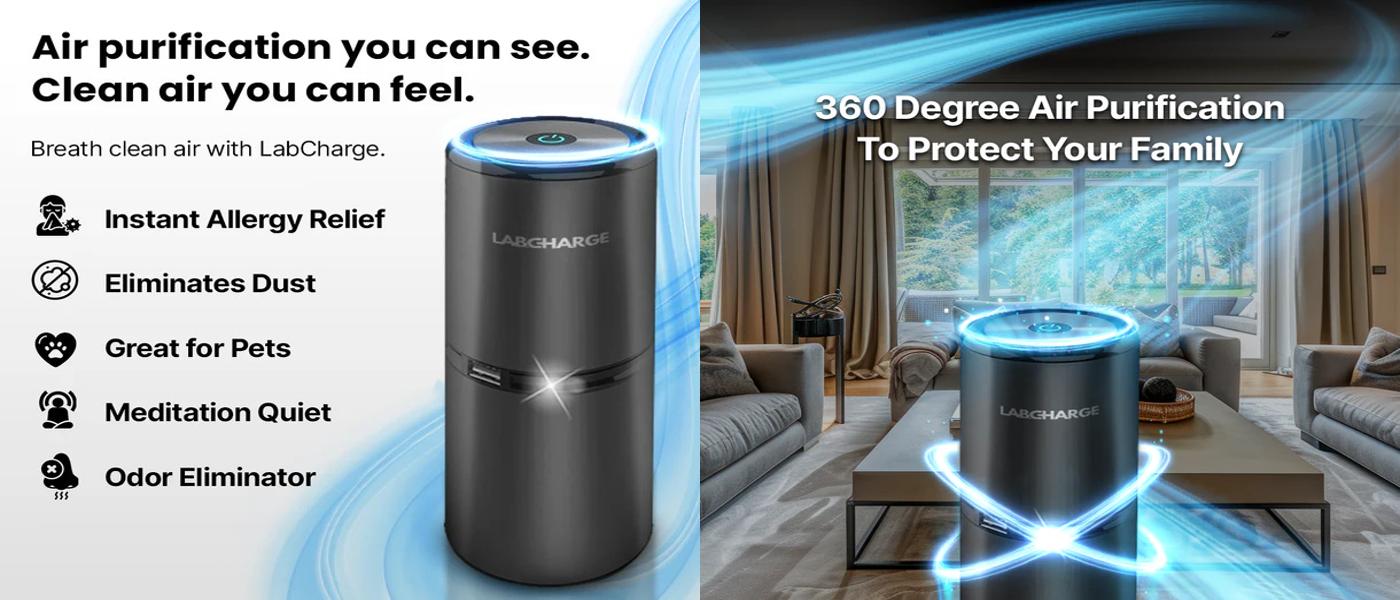
Comparing ionic air purifiers vs HEPA filters? Learn the differences in cost, noise, ozone safety, and ongoing maintenance to find the right fit for your home and pets.
When you start shopping for an air purifier, you quickly encounter two dominant technologies: HEPA filters and ionic purifiers. Both promise cleaner air, but they work in fundamentally different ways. One traps particles in a physical filter. The other releases negative ions that neutralize pollutants before they ever reach your lungs.
So which one is right for your home, your allergies, and your lifestyle? Let us break down the differences, the costs, and the science so you can make an informed decision.
How HEPA Filters Work
HEPA stands for High-Efficiency Particulate Air. A true HEPA filter uses a dense mat of fibers to physically trap particles as air is forced through by a fan. It catches dust, pollen, pet dander, and mold spores with impressive efficiency.
The trade-off? You pay for replacement filters every six to twelve months. Over time, those costs add up. Additionally, HEPA units require strong fans that create noticeable noise, especially at higher speeds. They also only clean the air that passes through the unit, leaving the corners of the room untouched.
How Ionic Air Purifiers Work
Ionic air purifiers take a different approach. Instead of trapping particles, they release negative ions into the room. These ions attach to positively charged particles like dust, smoke, and allergens. Once bonded, the particles become too heavy to remain airborne and fall to the floor, where they can be vacuumed away.
The biggest advantage is filterless operation. You never buy a replacement filter. There is no ongoing cost. Ionic units are also whisper-quiet because they use minimal moving parts. Lab Charge ionic purifiers, for example, operate silently while continuously refreshing your indoor air.
Cost Comparison Over Time
Let us look at the numbers.
A quality HEPA purifier might cost $100 to $300 upfront. Replacement filters typically run $30 to $80 every six months. Over three years, you could easily spend $250 to $500 on filters alone.
An ionic air purifier like those from Lab Charge has no filter replacements. You pay once. That is it. For budget-conscious households or anyone tired of recurring expenses, ionic technology offers significant long-term savings. You can explore filterless options here and see the difference.
The Ozone Question
This is the most important distinction. Some ionic purifiers produce ozone as a byproduct. Ozone can be a respiratory irritant at high levels.
Lab Charge addresses this head-on. Every unit is tested by an independent PPE-certified laboratory and confirmed to emit ozone at 0.05 parts per million (ppm) . This level complies with the FDA’s accepted safety limit. Transparency matters in this category, and Lab Charge provides clear documentation so you know exactly what you are bringing into your home.
For residents of California, please note that state regulations differ. Lab Charge does not ship to California addresses due to specific CARB certification requirements. This information is clearly stated on the website for full transparency.
Which One Is Best for Pet Owners
If you share your home with furry friends, pet dander and odor are likely top concerns.
HEPA filters will trap dander that passes through the unit, but they struggle with odors unless paired with an activated carbon layer. Ionic purifiers work continuously to neutralize airborne dander and also help break down odor-causing particles throughout the room, not just near the unit.
Lab Charge offers a Top-Rated Pet Air Purifier specifically designed for pet households. It targets dander, fur, and the lingering smells that come with animal companions. Check the pet purifier here.
Quiet Operation and Energy Efficiency
For bedrooms, nurseries, or home offices, noise matters. HEPA units often run at 40 to 60 decibels on higher settings comparable to a quiet conversation or background hum.
Ionic purifiers operate at near-silent levels. There is no loud fan forcing air through a dense filter. You can place one in a bedroom and sleep without disruption. They also consume less energy, making them a greener choice for continuous operation.
Practical Tip: Using Both Technologies Together
Here is a strategy many households adopt.
Use a HEPA purifier in high-traffic areas like the living room where noise is less of an issue. Then place ionic purifiers in bedrooms, home offices, or pet spaces where quiet operation and low maintenance matter most. This hybrid approach gives you the best of both worlds.
Final Thoughts
Choosing between an ionic air purifier and a HEPA filter comes down to your priorities. If you prefer a set-it-and-forget-it solution with no ongoing costs, ionic technology is a compelling choice. If you want maximum particle trapping regardless of noise and filter costs, HEPA serves that need.
Lab Charge offers a range of ionic air purifiers in Forest Green, Pearl Silver, and multi-pack configurations to suit any home. Whether you need a single unit for your bedroom or a 5-pack for whole-home coverage, there is an option that fits.
Breathe easier. Choose what works for your space. And if you are ready to try filterless air purification, explore the collection and claim your discount here.