Titanium vs Stainless Steel: Which Is The Best Non-Toxic Cookware For Your Health
Discover the key differences between titanium vs stainless steel cookware. Learn which option is safer, non-reactive, and better for building a truly non-toxic kitchen in 2025.
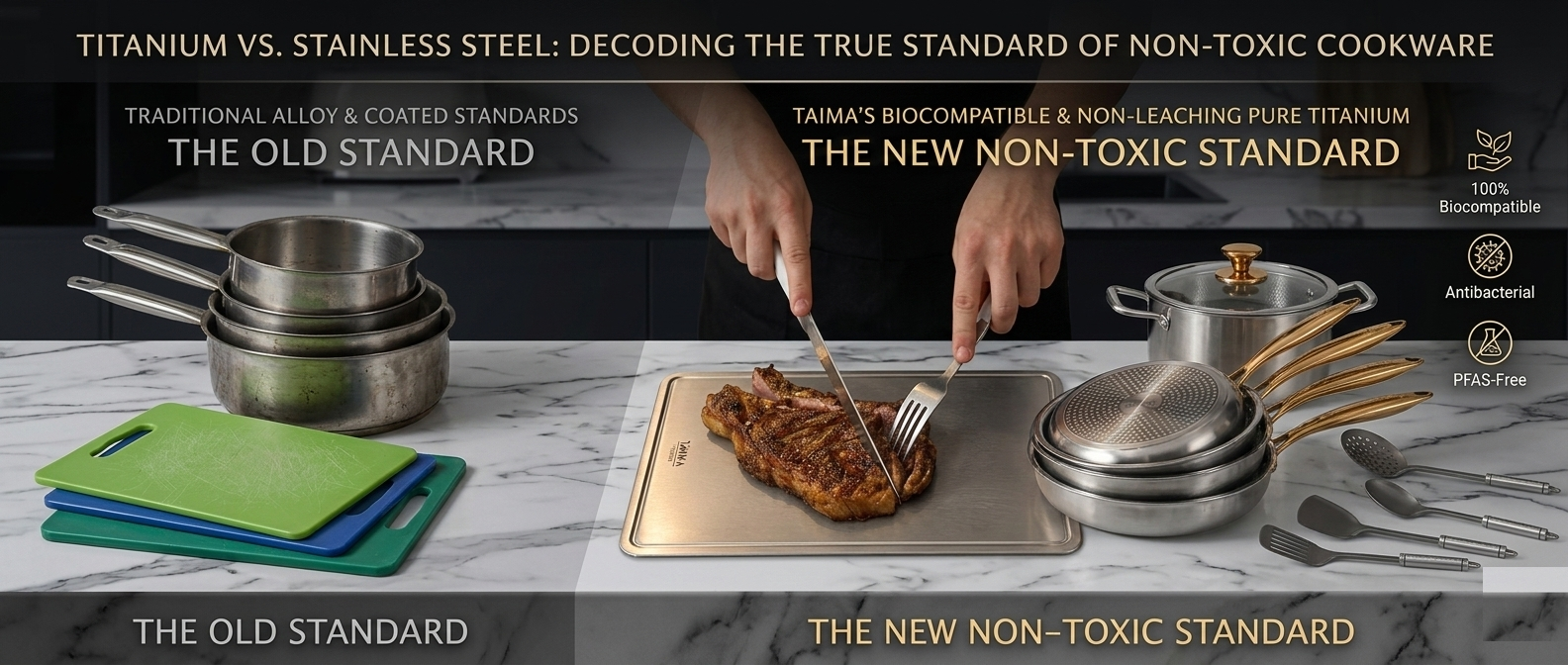
When people begin detoxing their kitchens, the first step is usually replacing old non-stick pans. Many home cooks switch to stainless steel because it is widely recommended as a safer option. However, in 2025, a growing number of health-conscious families are exploring an even cleaner solution, pure titanium cookware.
If you are researching the safest cookware for your kitchen, the debate usually comes down to two materials, titanium and stainless steel. Both are durable and widely used, but they offer different benefits when it comes to health, cooking performance, and long-term durability.
This guide will compare titanium vs stainless steel cookware so you can decide which material truly belongs in a modern, non-toxic kitchen.
The Reality Of Stainless Steel Cookware
Stainless steel cookware has been a kitchen staple for decades. Professional chefs rely on it because it handles high heat well and provides excellent browning for meats and vegetables.
However, stainless steel is not a single metal. It is actually an alloy that typically includes iron, chromium, and nickel. While it is generally safe for cooking, studies show that small amounts of nickel and chromium can sometimes leach into food during long cooking sessions with acidic ingredients like tomato sauce or citrus. These amounts are usually very small, but they can be a concern for people with nickel sensitivities.
Because of this, many health-focused consumers are now exploring cookware made from pure metals rather than metal alloys.
Why Pure Titanium Cookware Is Gaining Popularity
Pure titanium cookware is increasingly popular among people building toxin-free kitchens. Titanium is widely used in surgical tools and medical implants because it is extremely stable and biocompatible.
This means the metal does not react with food, does not corrode, and does not release metallic particles during normal cooking conditions.
If you want to explore cookware made from pure titanium, you can view the collection here:
Explore Pure Titanium Kitchenware
Key Benefits Of Titanium Cookware
Pure titanium cookware offers several advantages compared with traditional materials.
100 percent non-reactive cooking surface
Does not release nickel or chromium
Extremely corrosion resistant
Lightweight yet highly durable
Free from chemical coatings
Because titanium is chemically stable, it preserves the natural flavor of food and prevents a metallic taste when cooking acidic ingredients.
Head To Head Comparison
Upgrade Your Kitchen With Titanium
If you are planning to switch to healthier cookware, you do not need to replace everything at once. Many people start with their most frequently used pan.
A high-quality titanium skillet can handle daily cooking tasks such as sautéing vegetables, frying eggs, or searing meat. Over time, you can gradually upgrade other kitchen tools as well.
Explore premium titanium cookware here:
Pro Tips For Cooking With Titanium
Preheat your pan for about one minute before adding oil.
Use medium heat because titanium retains heat efficiently.
Add a small amount of oil for the best food release.
Clean with warm water and mild soap after cooking.
The Verdict
Stainless steel cookware remains a reliable option and is widely used by professional chefs. However, pure titanium cookware provides additional advantages for people who want the cleanest and most stable cooking surface possible.
Its biocompatibility, durability, and non-reactive properties make titanium one of the safest cookware materials available today.
If your goal is to build a truly toxin-free kitchen, upgrading to titanium cookware is one of the smartest long-term investments you can make.