How to Choose a Chef Knife: Your Practical Guide to Japanese Knives
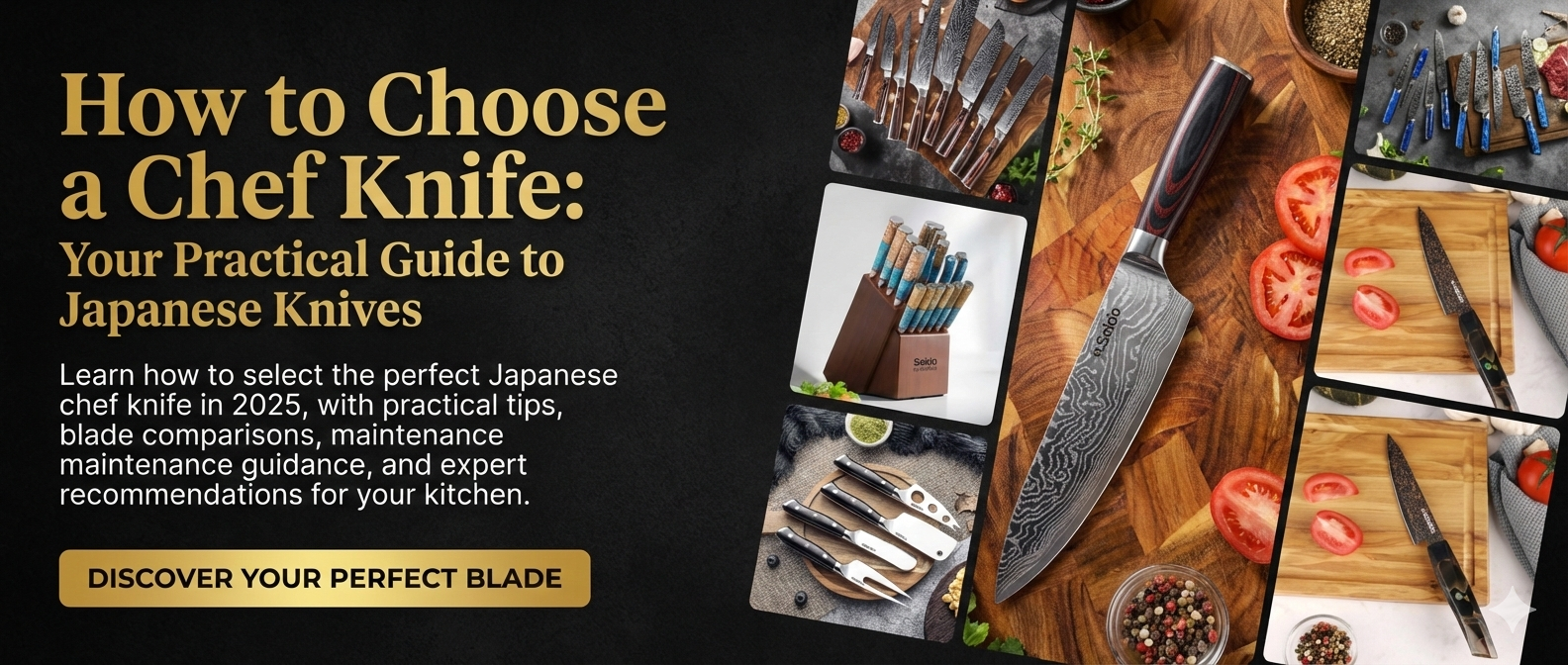
Learn how to select the perfect Japanese chef knife in 2025, with practical tips, blade comparisons, maintenance guidance, and expert recommendations for your kitchen.
Choosing your primary chef`s knife is one of the most important decisions for your kitchen. It’s an extension of your hand, impacting efficiency, safety, and enjoyment while cooking. With terms like Gyuto, Nakiri, and Damascus steel, the world of Japanese knives can seem complex. This guide will cut through the confusion and help you find the perfect blade based on how you cook, not just on trends.
Explore Seido chef knives here to see the full collection.
Japanese vs Western Knives: Precision vs Power
The first major choice is between Japanese and Western (often German) knife styles. German knives are heavier, with a thicker, curved blade designed for a rocking chop. They are durable and forgiving. Japanese chef knives, like a Seido Gyuto shop here, are often lighter, harder, and feature a straighter edge for precise push-and-pull slicing. They excel at clean cuts that preserve ingredient integrity. Think of it as precision versus power; your cutting style should guide you.
Understanding Key Japanese Knife Types
Once you lean towards Japanese precision, knowing the core types is key.
Gyuto (Chef’s Knife): Your all-purpose kitchen workhorse. Perfect for dicing vegetables, slicing meat, and mincing herbs. Check the Gyuto knives collection today.
Nakiri (Vegetable Knife): Straight, rectangular blade designed for fast, efficient chopping, slicing, and julienning. Ideal for plant-based cooking. View Nakiri knives here.
Petty (Utility Knife): Small, agile knife for peeling fruits, trimming fat, or coring strawberries. See Petty knives here.
Specialty Blades: Explore Kiritsuke knives (hybrid slicer and chopper) or serrated bread knives for crusty loaves without crushing. Browse specialty blades here.
Blade Steel and Construction: What Matters
The steel defines performance and care. Seido knives use high-carbon stainless steel, offering a razor-sharp edge, excellent retention, and rust resistance compared to pure carbon steel. For a distinctive look and superior performance, Damascus steel knives feature layered steel folded together, creating a stunning wave pattern while enhancing strength and durability. Explore the Damascus knife series here.
Your Knife is Only as Good as Your Care
A quality knife requires consistent care:
Sharpen Regularly: Use a whetstone or honing rod to keep the edge aligned.
Hand Wash Only: Dry immediately to prevent rust and corrosion.
Proper Storage: Use knife blocks, rolls, or magnetic strips to protect the blade.
Learn more about knife maintenance tools here. Regular maintenance ensures consistent performance and longevity, keeping your kitchen experience safe and efficient.
Making Your Final Choice: A Simple Checklist
Grip & Feel: The knife should feel balanced and comfortable in your hand. Hand shape and weight are personal.
Primary Tasks: Will you use one versatile Gyuto, or build a set with a Nakiri and Petty? See full knife sets here.
Aesthetic & Value: Do you prefer a classic finish or the artistry of a Damascus knife?
Care Commitment: Are you ready for the simple upkeep of high-quality steel?
Conversion-Oriented CTA
Ready to experience the precision of a hand-forged Japanese knife? Explore Seido chef knife sets here for beginners and experts, or select your perfect individual blade to start your culinary journey today.